About me
Hey there! I'm Pratham, a first-year Master's student at Georgia Tech studying Computational Science and Engineering. I'm passionate about Machine Learning, High-Performance Computing and AI Systems, and love working at the intersection of rigorous research and real-world impact.
My academic and professional journey spans research, industry, and a wide range of technical domains. I completed my undergraduate degree at IIT Madras, where I built a strong foundation in machine learning and applied mathematics through rigorous coursework. During this time, I was involved in Applied AI research at the AiREX Lab, IISc Bangalore, focusing on Scientific Machine Learning. This work grew into a collaboration with WIAS Berlin, resulting in a co-authored paper that proposed a novel research idea and was published in a top-quartile journal. I later worked as a Data Scientist on the Risk Modeling team at American Express, where I learned how real-world data is used to build machine learning models that work reliably in production.
I am actively involved in the tech community at Georgia Tech, and am diving deep into domains like Foundation Models, Machine Learning Systems and High-Performance Algorithms- the invisible infrastructure powering much of today's technology.
Outside of work, I'm someone who thrives on curiosity. I love stepping outside my comfort zone to learn things that are unfamiliar to me. I enjoy playing soccer, badminton, and running, having completed several half marathons along the way. On the creative side, I play the piano and guitar, which helps brings a different kind of energy into everything else I do! Feel free to reach out to me via email at psunkad3@gatech.edu.
Education
M.S. Computational Science and Engineering · Georgia Tech
Coursework: Vision Language Foundation Models, Machine Learning Systems, Computational Data Analysis, Algorithms, Modeling and Simulation
B.S. Mechanical Engineering & Machine Learning · IIT Madras
Coursework: Numerical Methods, Probability and Stats, Linear Algebra, Deep Learning, Reinforcement Learning, NLP, Multi-Armed Bandits
Thesis: Lattice Boltzmann Method for simulating linear elastic displacement fields
Experience
Data Scientist, Risk Modeling · American Express
As a Data Scientist on the Risk Modeling team at American Express, my work centered on building and maintaining the quantitative models that drive credit decisions at scale. This included designing credit decisioning frameworks using probability-of-default models, line models, and risk metrics to determine appropriate loan amounts and credit card limits for customers — work that directly contributed to $10M in net pre-tax income. I also backtested and refined risk management strategies to ensure profitability held up through different phases of the economic cycle, while implementing operational risk controls and maintaining Management Information Systems to satisfy regulatory reporting requirements.
Research Fellow, Scientific ML · Weierstrass Institute Berlin
As part of my research on variational physics-informed neural networks (VPINN), I developed a VPINN framework framework inspired by Streamline Upwind Petrov-Galerkin (SUPG) stabilization to solve convection-dominated PDEs — a class of problems where standard neural approaches often produce unstable, oscillatory solutions. I integrated an SUPG-inspired stabilization term into the loss function and engineered an adaptive hard-constraint mechanism to enforce Dirichlet boundary conditions exactly, rather than penalizing violations softly as in standard PINNs. This led to a significant improvement in solution accuracy, which resulted in a publication in CMAME journal.
Research Intern, Computational Data Science · AiREX Lab, IISc Bangalore
Contributed to the development of FastVPINNs - a tensor-based deep learning framework for efficiently solving partial differential equations using hp-Variational Physics-Informed Neural Networks (hp-VPINNs). The framework leverages optimized tensor operations to significantly accelerate training, achieving a 100× reduction in median training time per epoch compared to traditional hp-VPINNs.
Projects
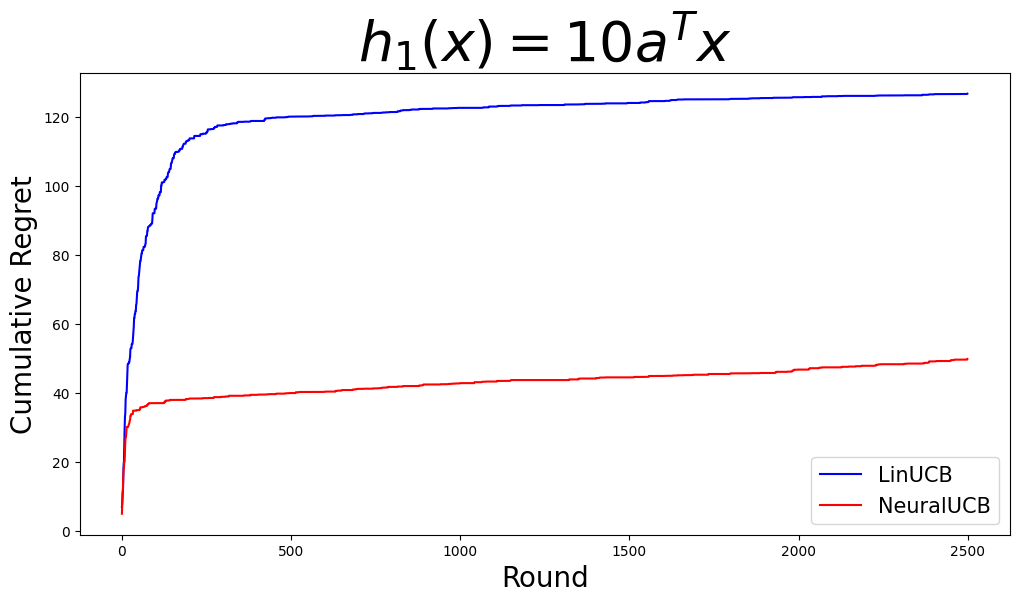
Neural Contextual Bandits with UCB Based Exploration · Personal Project
Explored contextual multi-armed bandits under stochastic rewards and implemented NeuralUCB, a neural network-based approach that uses upper confidence bounds to balance exploration and exploitation. Evaluated its performance through cumulative regret and demonstrated improved performance over baseline methods as the number of decision rounds increased
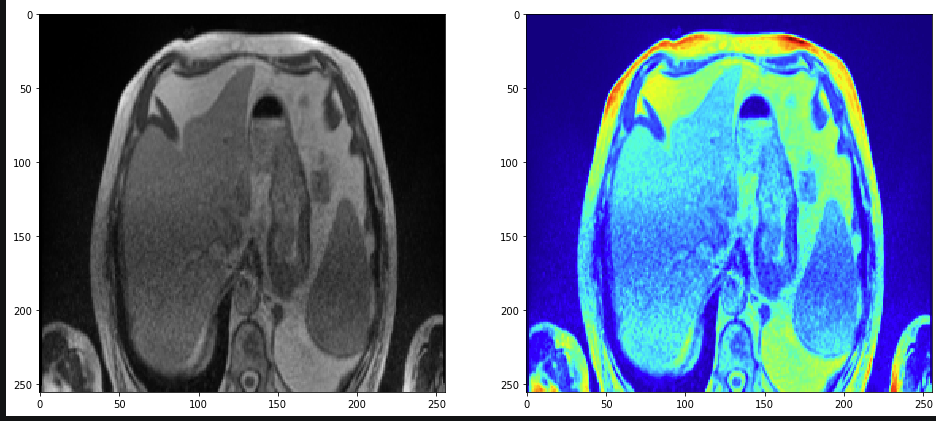
Medical Image Segmentation · AI Club IIT Madras
Developed a U-Net-based deep learning model for segmenting gastrointestinal (GI) tract organs from MRI scans, incorporating autoencoder regularization and a shared encoder to improve feature learning. Used a 2.5D representation to capture depth information from neighboring slices while maintaining lower computational cost than full 3D models.
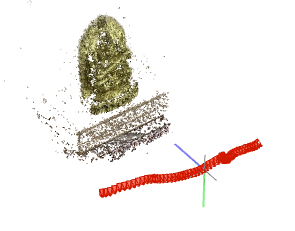
Neural Radiance Fields (NeRF) for view synthesis · Course Project
Implemented a Neural Radiance Field (NeRF) for 3D scene reconstruction and novel view synthesis, including automated data collection and camera pose estimation using COLMAP. Trained a neural network to model pixel color and opacity, enabling the scene to be rendered from arbitrary 3D positions and viewing directions.
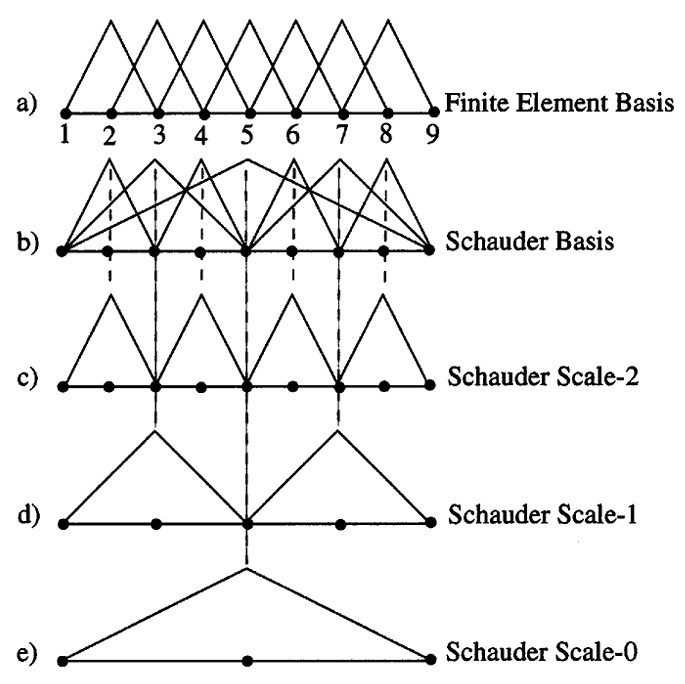
Wavelet Basis for PDEs · Course Project
Developed a multi-scale finite element method (FEM) framework using hierarchical Schauder wavelet bases to efficiently solve convection-diffusion PDEs. Decomposed solutions into coarse FEM components and fine-scale wavelet corrections, and used convergence analysis to identify an optimal wavelet scale that improved accuracy over standard FEM.
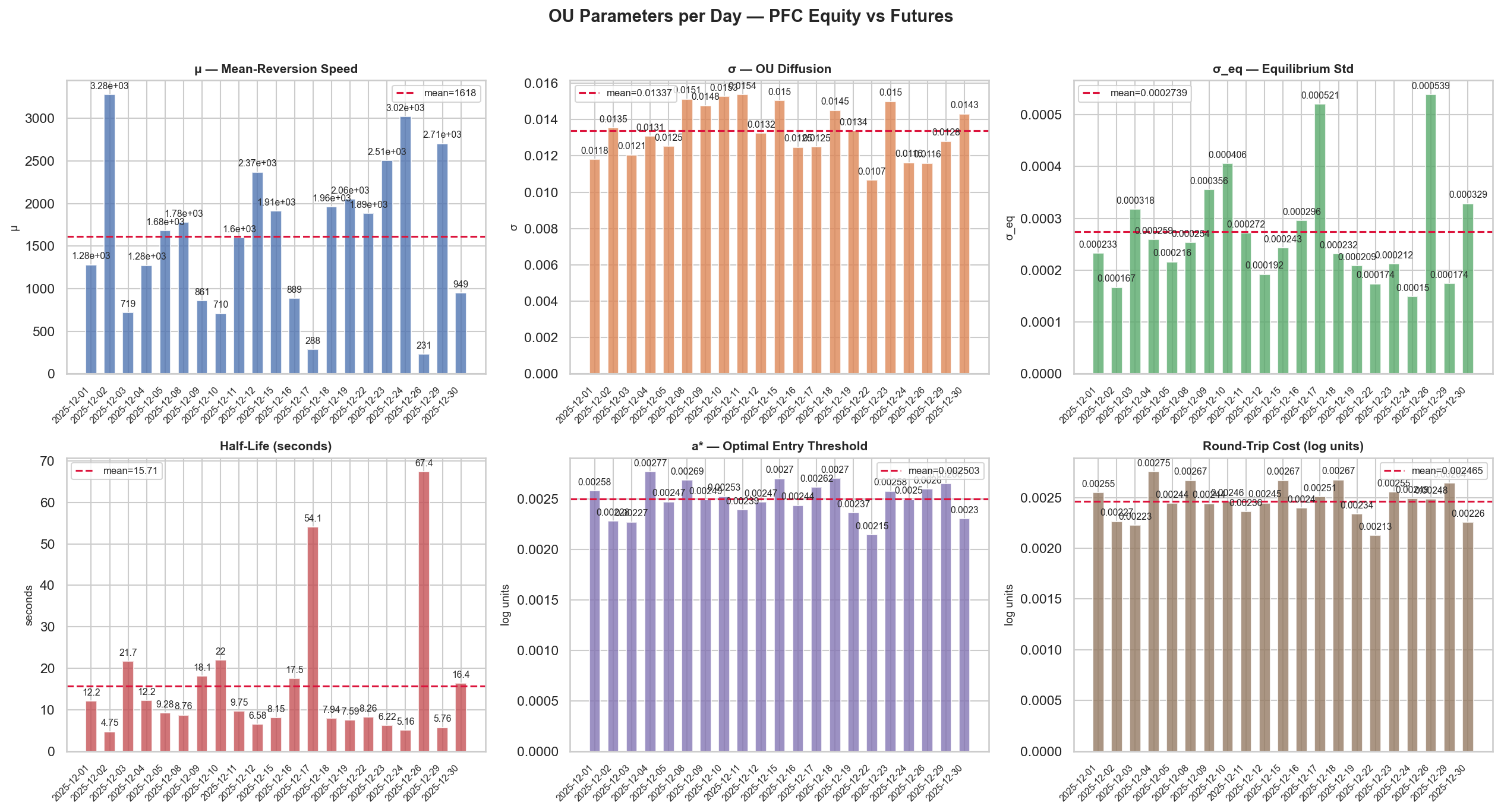
High-Frequency Lead–Lag Detection in Equity Markets · Personal Project
Designed a dual-channel statistical framework for detecting high-frequency lead–lag relationships between financial assets using wavelet cross-covariance and kernel-based estimators. Applied adaptive bandwidth selection and validated the approach on synthetic and NSE equity/ETF data, reducing false positives through independent detection channels.
Publications
Improving hp-variational physics-informed neural networks for steady-state convection-dominated problems · Computer Methods in Applied Mechanics and Engineering
Extended the FastVPINNs framework for convection-dominated convection-diffusion-reaction problems. Proposed neural network architectures to learn spatially varying SUPG stabilization parameters and optimize indicator functions for hard-constrained Dirichlet boundary conditions. Numerical experiments demonstrated improved solution accuracy compared to existing approaches.
FastVPINNs: Tensor-Driven Acceleration of VPINNs for Complex Geometries · SIAM Journal on Scientific Computing
Introduced FastVPINNs, a tensor-based extension of hp-VPINNs designed to reduce computational cost and improve scalability for solving PDEs. Optimized tensor operations achieve a 100× reduction in median training time per epoch compared to traditional hp-VPINNs. Demonstrated improved speed and accuracy, particularly for high-frequency problems and inverse problems on complex domains.